
How to Remove Stains from Granite Countertops: A Room-by-Room Guide
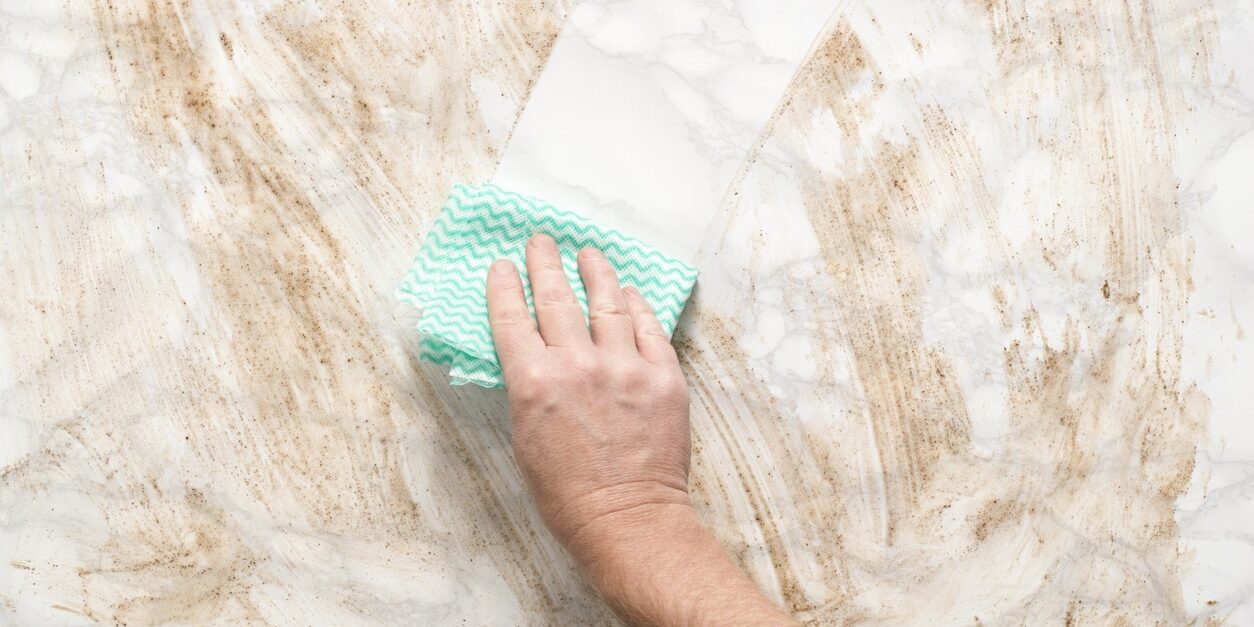
You walk into the kitchen and notice it — a dark ring where a wine glass sat overnight, or a pale cloudy patch where something spilled and dried before you could wipe it up. It happens. Granite is durable, but it isn’t impervious to staining, especially when the sealant has thinned or when something sits on the surface long enough to be absorbed.
The good news: most granite stains are removable. The approach depends on what caused the stain and how long it has been there. This guide walks through the most common types of granite stains and the right way to tackle each one — without causing more damage in the process.
Before You Start: A Few Ground Rules
Granite stain removal is not like scrubbing a tile floor. Aggressive cleaning can cause more harm than the stain itself. Before reaching for any product, keep these principles in mind:
- Never use vinegar, bleach, or ammonia-based cleaners. They etch the stone and break down the sealant.
- Blot don’t scrub. Scrubbing pushes the stain deeper into the pores. Gentle dabbing lifts it out.
- Test any treatment in an inconspicuous spot first, particularly on darker or more patterned granite where reactions can vary.
- Be patient. Most stain-removal methods on granite require dwell time. Rushing won’t help.
- Dry completely after treatment. Leaving moisture on granite — even clean water — can cause new spots.
If your granite stains repeatedly or absorbs liquids quickly, it may be time to reseal. A properly sealed surface resists staining significantly better than one with a worn sealant.
Understanding What Type of Stain You’re Dealing With
Granite stains generally fall into a few categories, and the treatment differs by type:
- Oil-based stains: cooking oil, grease, butter, lotion, cosmetics. These darken the stone.
- Organic stains: coffee, tea, wine, juice, food, leaves, or anything biological. Often brownish or pinkish.
- Inorganic / mineral stains: hard water deposits, rust, or metal marks. Can appear orange, brown, or white.
- Paint or ink: requires a more targeted solvent-based approach.
- Etch marks: not actually stains, but surface dulling caused by acidic substances. Common in areas exposed to citrus, wine, or acidic foods.
We’ll cover each one below.
Oil-Based Stains: Grease, Butter, Cooking Oil, Lotion
Oil-based stains show up as a darkened patch — the stone looks “wet” in a specific area even after the surface dries. This happens because the oil has been absorbed into the stone’s pores.
What to use: A poultice
A poultice is a paste that draws the stain out of the stone as it dries. It’s the most effective tool for deep stains in granite, and it works especially well on oil-based ones.
For oil stains, mix baking soda with a small amount of dish soap and enough water to form a thick, peanut-butter-consistency paste. Some professionals use acetone instead of dish soap for stubborn grease stains.
How to apply it:
- Wet the stained area lightly with warm water.
- Apply the poultice paste about a quarter-inch thick over the stain.
- Cover with plastic wrap and tape the edges down to slow drying.
- Let it sit for 24 to 48 hours.
- Remove the plastic, let the paste dry completely, then scrape it off gently with a plastic scraper.
- Rinse the area with warm water and dry thoroughly.
- Repeat if necessary — some deep stains need two or three applications.
Don’t rush the dwell time. The poultice works by absorbing the stain as moisture evaporates. Removing it too early means the stain stays in the stone.
Organic Stains: Coffee, Wine, Tea, Juice, Food
Organic stains are among the most common in kitchen granite. They’re often brownish, tan, or pinkish depending on the source — and the longer they sit, the deeper they go.
What to use: Hydrogen peroxide poultice
For light-colored or medium-toned granite, a poultice made with hydrogen peroxide (3% solution) and baking soda works well on organic stains. The mild bleaching action lifts the color without damaging the stone.
Mix hydrogen peroxide with baking soda until you get a thick paste, apply as described above, and allow 24 to 48 hours of dwell time.
For darker granite, be more cautious with hydrogen peroxide — it can lighten the stone if used too aggressively. Try plain baking soda and water paste first and use hydrogen peroxide only if the first attempt doesn’t move the stain.
For surface-level organic stains (caught early):
If you catch the spill quickly — wine, coffee, juice — blot it immediately rather than wiping. Then clean the area with a stone-safe cleaner or a small amount of pH-neutral dish soap and warm water. Many organic stains won’t penetrate the sealant if addressed within minutes.
Hard Water Stains and Mineral Deposits
In the St. Louis area, where tap water tends toward the harder end of the spectrum, white or cloudy buildup around the sink, faucet, and countertop edges is a common complaint. These are mineral deposits — calcium and magnesium — left behind as water evaporates.
What to use: Dry removal first, then a stone-safe mineral remover
Start by trying to remove the deposit mechanically before applying any product. A plastic scraper or even a credit card edge can chip away dried mineral buildup without scratching the surface.
For stubborn deposits, look for a stone-safe calcium and lime remover — specifically one formulated for natural stone, not the citric-acid-based versions commonly used on tile or fiberglass. Brands like StoneTech make dedicated hard-water removers that won’t etch the granite.
Do not use CLR, lime-away, or similar acidic products on granite. They will etch and dull the surface.
Rust Stains
Rust stains typically come from metal items left on the countertop — a cast iron pan, a metal container, a damp tool. They appear as orange-brown marks and can be tricky to remove if they’ve had time to oxidize into the stone.
What to use: A non-acidic rust remover formulated for stone
Standard rust removers contain acids that will damage granite. Instead, look for an iron stain remover or rust remover specifically labeled safe for natural stone. Apply it according to the product directions and avoid letting it dwell longer than recommended.
For light rust staining, a poultice made with commercial iron-stain powder (available at stone care suppliers) mixed with water can be effective.
Prevention tip: Always use trivets or pads under metal items, especially anything that may be damp. A small rubber mat under a cast iron pan goes a long way.
Paint and Ink Stains
Paint that has dried onto granite is best removed with a plastic scraper applied at a low angle. Never use a metal scraper — it will scratch the surface.
Once you’ve lifted what you can mechanically, a small amount of acetone (nail polish remover) on a cotton ball can clean up remaining residue. Dab rather than rub, and rinse the area thoroughly with water afterward. Acetone evaporates quickly, so dwell time is limited — work in small sections.
For ink stains, acetone is similarly effective. Always test in a hidden area first, particularly on dark or heavily veined granite where color variation can make reactions harder to predict.
Etch Marks: When the Problem Is Surface Dulling, Not Staining
This is one of the most misunderstood granite issues. Homeowners see a dull, hazy spot on the granite surface and assume it’s a stain — but it’s actually an etch mark, which is physical damage to the surface rather than a discoloration inside the stone.
Etch marks are caused by acidic substances — lemon juice, wine, tomato, vinegar-based dressings — reacting with the stone and removing the polished finish in that area. They look like dull patches or faint rings and can’t be removed by cleaning.
How to address etch marks:
Mild etch marks on honed (matte) granite may be barely noticeable. On polished granite, the contrast between etched and intact surface is more visible.
Light etching can sometimes be improved with a granite polishing powder or paste, which gently refinishes the surface. Products like Marble and Granite Polishing Powder are available at stone care retailers.
Deep or widespread etching typically requires professional resurfacing. E&B Granite can assess the damage and recommend the right approach.
The best solution for etch marks is prevention: use coasters, wipe up acidic spills immediately, and never leave citrus, wine, or vinegar-based products sitting on the surface.
Quick Reference: Granite Stain Treatment Guide
| Stain Type | Common Causes | Recommended Treatment | Important Notes |
| Oil-based | Grease, butter, lotion, cosmetics | Baking soda + dish soap poultice (24-48 hrs) | May need 2–3 applications for deep stains |
| Organic | Coffee, wine, tea, juice, food | Hydrogen peroxide + baking soda poultice | Use caution on dark granite — test first |
| Hard water | Mineral deposits from tap water | Plastic scraper + stone-safe mineral remover | Avoid CLR and citric acid products |
| Rust | Metal items left on wet granite | Stone-safe iron/rust remover | Standard rust removers will damage granite |
| Paint / Ink | Dried paint, marker, ink | Plastic scraper + acetone (dab, don’t rub) | Test in hidden area first |
| Etch marks | Acidic foods, vinegar, wine | Polish powder for mild marks; pro resurfacing for deep | Not a stain — surface damage from acid |
When to Call a Professional
Most surface stains can be handled at home with patience and the right products. But there are situations where professional help makes sense:
- The stain has been there for weeks or months and multiple poultice applications haven’t moved it.
- You’re seeing etch marks across a significant area of the surface.
- The granite appears cracked, deeply pitted, or structurally compromised around the stain area.
- You’re not sure what caused the stain and don’t want to risk a wrong treatment.
E&B Granite has been serving the St. Louis area for over 20 years, and stone care is something we take seriously. If you’re dealing with a stain that won’t budge, or if your countertops are showing signs of wear that cleaning won’t fix, give us a call. We can assess what’s going on and help you figure out the right path forward — whether that’s a DIY solution or something we should handle for you.
Protect the Stone Going Forward
Removing a stain is satisfying — but prevention is even better. Here’s the short list of habits that keep granite countertops looking their best:
- Wipe up spills immediately, especially anything acidic or oil based.
- Use coasters under glasses, particularly anything containing wine, juice, or coffee.
- Keep cutting boards and trivets handy and use them consistently.
- Reseal your granite every one to five years depending on usage and stone type.
- Use only stone-safe cleaners for everyday maintenance. See our companion post: What Cleaners Are Safe for Granite Countertops?
Granite is one of the most durable surfaces available for kitchens and bathrooms — and with the right care, it will look exactly as beautiful in fifteen years as it does today.